![Virtual Numbers for SMS OTP: The 5 Safest Methods [2026]](https://cdn-h.xcloudphone.com/posts/hero-virtual-number-otp-1773394510745.webp)
Between 70% and 80% of major platforms — including Facebook, Google, WhatsApp, and TikTok — actively block VoIP numbers. This means traditional virtual numbers from apps like TextNow or Google Voice are no longer reliable for receiving SMS OTPs.
Using your personal phone number to register for everything invites spam, SIM swap risks, and massive privacy leaks. Conversely, using free virtual numbers usually means dealing with recycled digits, blocked OTPs, and instantly flagged accounts.
Hardware SIM Boxes utilize authentic carrier SIMs (e.g., AT&T, T-Mobile) plugged directly into hardware. Platforms see a legitimate mobile carrier number, not a VoIP flag. This pushes OTP success rates to an undeniable 95-99%, compared to the dismal 20-40% success rate of VoIP numbers. This strict "one-SIM-per-account" principle heavily mirrors the isolation tactics required when operating a high-trust phone farm — every digital identity demands a unique, verified carrier identity.
This guide covers:
- What virtual numbers are — and exactly why 70% of platforms block VoIPs
- How VoIP detection mechanics work — tearing down Carrier Lookups and HLR checks
- Comparing the 5 methods — Virtual Apps, SIM Rentals, eSIMs, Burner Phones, and Hardware SIM Boxes
- 5 distinct use cases — ranging from personal privacy to multi-account B2B operations
- Setting up a SIM Box — 4 rapid steps taking under 30 minutes
- Actual cost breakdowns — analyzing the true cost per successful OTP
What Is a Virtual Number? And Why Do 70% of Platforms Block Them?
A virtual phone number is a number entirely detached from a physical SIM card. It operates over VoIP (Voice over Internet Protocol) protocols, allowing users to receive SMS and calls via the internet instead of traditional cellular networks. However, 70-80% of major platforms proactively block virtual numbers because backend carrier lookups definitively identify them as VoIP.
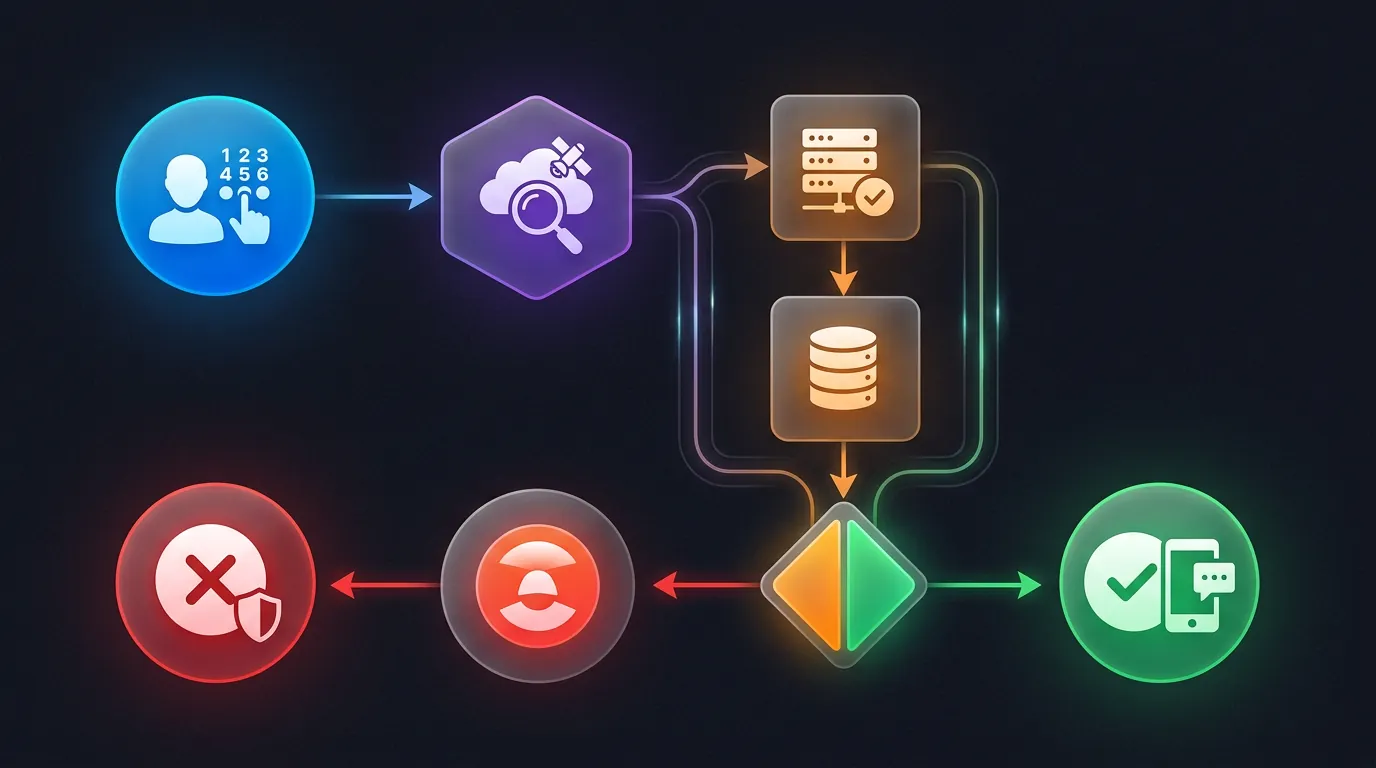
When you attempt to register WhatsApp using a TextNow number → the platform pings a Carrier Database → the response returns carrier type = VoIP → BLOCKED. Try using a real T-Mobile SIM → the response returns carrier type = Mobile → INSTANT PASS.
Phone numbers are predictably blocked from receiving OTPs if their carrier type returns as VoIP during the initial Carrier Lookup.
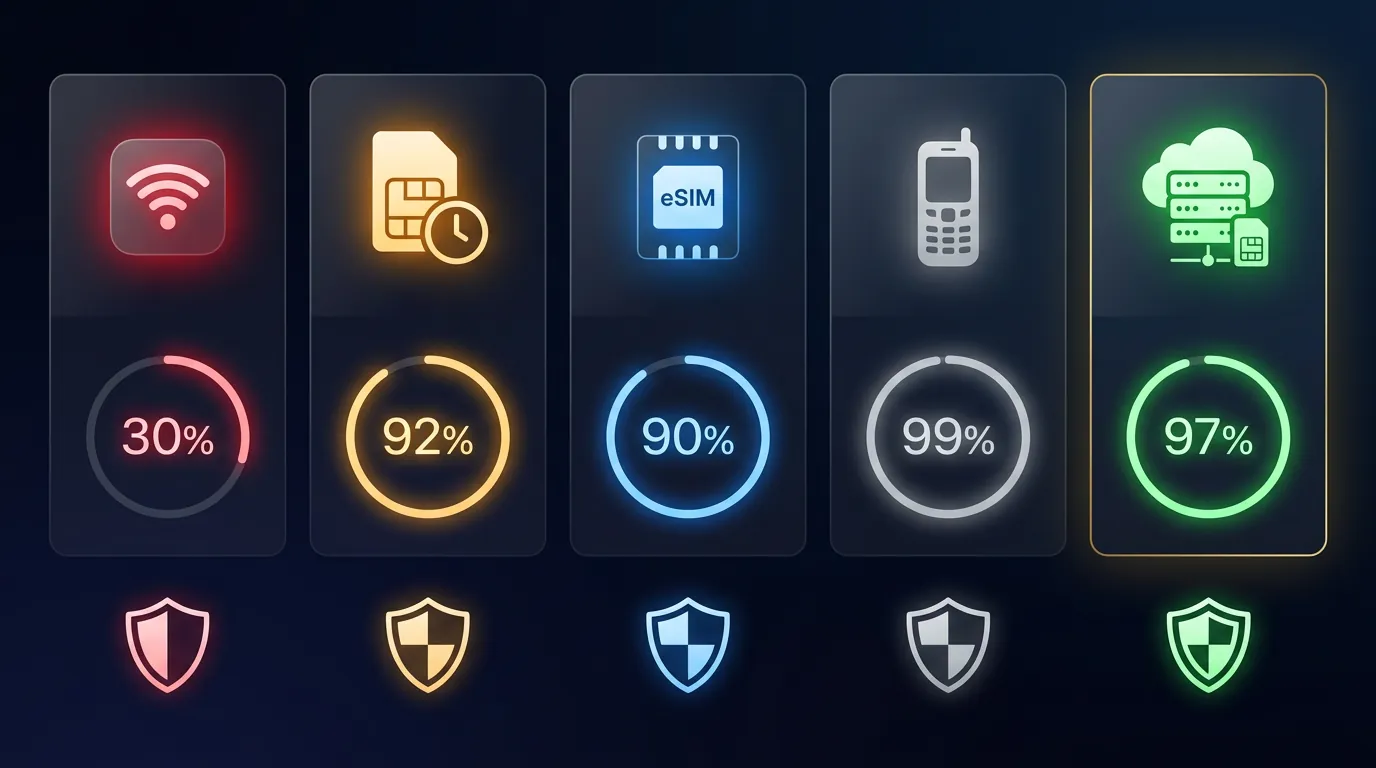
Success rates starkly reflect this technical difference, according to recent 2025 data from Telesign and Twilio Verify:
The Mechanics of VoIP Detection — Carrier Lookups and HLR
Platforms do not inspect the content of your OTP — they inspect the carrier type of the receiving number. A VoIP flag equals immediate rejection.
Platforms rely on three primary detection mechanisms: HLR Lookups, Carrier Database queries, and Prefix Pattern analysis.
HLR (Home Location Register) Lookups check if a SIM is actively registered on an authentic mobile network. Because VoIP numbers lack HLR records on cellular networks, they fail the check instantly. Carrier Databases, provided by services like Telesign, Twilio Lookup, and Numverify, return exact carrier types (Mobile, Landline, VoIP, or Toll-free). Prefix Pattern Analysis identifies established VoIP providers who notoriously utilize easily identifiable prefixes heavily concentrated inside blacklist databases.
Beyond these three structural mechanics, behavioral analysis algorithms easily detect mass registrations stemming from identical API endpoints, leading to wholesale flagging.
What Is a Non-VoIP Number?
A Non-VoIP number is a number functionally backed by a genuine physical SIM card (carrier SIM), yet often managed via software or API dashboards. When queried, Carrier Lookups return type = Mobile, forcing platforms to accept the verification.
For instance, an authentic SIM card slotted into a real cloud phone is accessed entirely via a web dashboard, yet its carrier type remains strictly "Mobile" because the SIM itself registers actively on a real mobile network. The resulting success rate: an untouchable 95-99%.
A SIM Box is non-VoIP by design — real SIMs operating inside ARM hardware presenting 100% genuine carrier identities.
Comparing the 5 Methods for Receiving SMS OTPs
The top 5 methods for bypassing OTP limits today are Virtual Number Apps, Online SIM Rentals, eSIMs, Burner Phones, and Hardware SIM Boxes. Every method serves distinct use cases spanning privacy, scalability, and operational costs.
1. Virtual Number Apps (TextNow, Google Voice, Yesim)
Virtual apps provide numbers for free or at exceptionally low costs, requiring mere minutes to set up. However, their carrier type sits strictly at VoIP, triggering blocks across 70%+ of top-tier platforms. Worse, these numbers are aggressively recycled — leaving you exposed to previous users' OTP histories and sudden revocations.
2. Online SIM Rentals (SMSPVA, SMS-Activate, 5sim.net)
SIM rental platforms utilize genuine, physical SIMs (non-VoIP), driving success rates to a respectable 90-95%. They offer global flexibility, allowing you to rent SIMs spanning 50+ countries. The fatal flaw: they are almost entirely temporary. Once you receive your initial OTP, the number is forfeited. You cannot hold the number long-term, permanently destroying your ability to recover critical accounts later.
3. eSIMs (Airalo, Holafly, eSIM.me)
An eSIM is a genuine digital SIM. Its carrier type flags as purely Mobile, guaranteeing high acceptance rates. It excels at multi-country operations, enabling rapid deployment across borders without waiting for physical shipping. The downside: many travel-focused eSIMs strictly support data (no incoming SMS/calls), and require compatibility with modern flagship devices.
4. Burner Phones (Cheap Handset + Prepaid SIM)
A classic burner phone guarantees 100% genuine SIM metrics and ultimate control. The carrier type undeniably reads as "Mobile", pushing success rates to 99%. Unfortunately, this method completely fails to scale — operating 100 high-trust accounts would literally require 100 physical phones charging continuously on your desk.
5. Hardware SIM Boxes (XCloudPhone Integrations)
A Hardware SIM Box is specialized hardware designed to house dozens of real SIM cards simultaneously. It projects genuine carrier identities (non-VoIP) and maintains 95-99% success rates. Crucially, it scales effortlessly — users manage 100+ SIMs via desktop software. Because it facilitates long-term number retention, it remains the absolute best choice for business operations, banking, and high-value social media accounts.
5 Practical Use Cases — When to Use Virtual vs Genuine SIMs
The 5 most common OTP verification use cases range from simple personal privacy to complex B2B multi-accounting infrastructure:
- Registering expendable accounts (trial apps, testing services, burner forums) → Virtual Number Apps handle this perfectly. Losing the account carries zero consequences.
- Protecting personal privacy (one-off online purchases, untrusted newsletters) → 1-time SIM Rentals. Receive the initial verification code, then discard the number.
- Securing critical 2FA for business (corporate email, cloud servers, payment gateways) → Hardware SIM Boxes or eSIMs. Long-term retention is mandatory here; losing the number means getting permanently locked out.
- Farming multi-account social media (running 100+ TikTok, Facebook, or Instagram profiles) → Hardware SIM Boxes. This mandates scale, non-VoIP metrics, long-term retention, and seamless integration with undetectable cloud phones.
- Operating cross-border (traveling, multinational e-commerce, remote work) → eSIMs or Country-specific SIM Rentals.
📌 The Golden Rule: The more critical the account, the more essential a genuine, long-term physical SIM becomes. Free virtual numbers are exclusively for disposable trials.
Setting Up a Hardware SIM Box — Managing OTPs for 100+ Accounts
Setting up a professional Hardware SIM Box for enterprise-level OTP management requires just 4 straightforward steps, typically completed inside 30 minutes.
Step 1 — Procure Genuine SIMs and Hardware
Purchase real, physical SIM cards from reputable local carriers. Insert them precisely into your preferred Hardware SIM Box (or even spare secondary Android devices if managing smaller networks). Ensure your physical location maintains strong cellular reception.
Step 2 — Verify Cellular Functionality
Send a test SMS directly from a cloud phone to your personal number. Conversely, receive external SMS texts into the SIM Box to verify incoming traffic. Confirm carrier identity integrity: navigate to Settings → About Phone → SIM status — if the authentic carrier name (e.g., AT&T, Vodafone) displays clearly, your SIM is broadcasting a pristine non-VoIP signal.
Step 3 — Target Registration and Code Extraction
Open your target application (TikTok, Facebook, WhatsApp) explicitly on your isolated farming infrastructure, such as a real cloud phone. Initiate registration using the exact number linked to your freshly inserted SIM. Read the incoming OTP from the SIM Box desktop dashboard, and input the resulting code back into your cloud phone.
Always strictly adhere to 1 SIM = 1 precise account. Never multiplex a single number across identical platforms — doing so broadcasts an immediate phone farm signature.
Step 4 — Long-Term Maintenance
Maintain active SIM status by setting up automated periodic top-ups and enforcing minor billing activity. Aggregate your incoming OTPs through the SIM Box's centralized desktop management tool. Run this securely in tandem with your undetectable cloud phone farm to maintain perfectly synchronized, fully isolated operational environments.
The True Cost — Virtual Number Apps vs Hardware SIM Boxes
The actual cost to receive an OTP fluctuates drastically from $0 (free virtual apps) up to $15/month (Hardware SIM Box porting). Yet critically, the "cost per successful OTP" on a real cloud phone is mathematically lower because constant retries are totally eliminated. The table below outlines realistic cost projections across three distinct scales:
Virtual Number Apps exhibit abysmal success rates hovering around 20-40% (fact). Hardware SIM Boxes consistently deliver 95-99% success (fact). Real-world costs may fluctuate wildly depending on local provider pricing and geospatial region (possibility).
While Virtual Number Apps appear mathematically cheapest, enduring 5 failed retries at $0.50 per attempt = $2.50 for a single successful OTP. Conversely, a Hardware SIM Box incurs a flat $3-10/SIM monthly maintenance fee, but guarantees first-try success → ultimately resulting in a 30-50% lower cost per successful OTP when factoring in the devastating time-cost of endless retries.
⚠️ Key Warning: SIM Rentals charge explicitly per code requested. Costs compound linearly whenever you require periodic 2FA or recovery verifications. Hardware SIM Boxes present a predictable, flat monthly cost regardless of how many OTPs you cycle to the device.
FAQ — Most Asked Questions Regarding Virtual Numbers
"Can Google Voice receive OTPs reliably?"
Severely limited — it guarantees blocks across major platforms. Google Voice fundamentally registers as a VoIP number. WhatsApp bans it entirely. Facebook blocks it inconsistently, while Telegram might begrudgingly accept it while simultaneously demanding secondary identity verifications.
"Is a 1-time SIM rental safe for my main business account?"
Absolutely not. A 1-time rental guarantees you permanently lose access to that precise number after the initial code. If you trigger a security protocol, require a password reset, or log in from a new IP → the platform will forcefully text an OTP to your old rented number → you fail to receive it → you are permanently locked out. High-value accounts irrevocably demand long-term SIM retention.
"Are eSIMs vulnerable to VoIP detection algorithms?"
No. eSIMs are explicitly designated as authentic carrier SIMs formatted digitally. Their carrier type firmly returns "Mobile" → guaranteeing platform acceptance. It's crucial to differentiate: eSIM ≠ VoIP. An eSIM is a carrier-issued chip embedded in a motherboard, while VoIP operates exclusively over internet protocols separated from cellular networks.
"Should I use virtual numbers for digital wallets or banking apps?"
Never. Financial institutions explicitly demand authentic, government-ID verified phone numbers. Utilizing virtual numbers introduces a catastrophic risk of permanent account suspension during sudden KYC identification checks. Strictly reserve your personal, primary phone number for sensitive financial operations.
"What exactly is a SIM Box?"
A SIM Box is specialized desktop hardware built to securely tether dozens of physical SIM cards simultaneously. It routes all SMS messaging straight into local desktop software, obliterating the need to juggle 50 physical handsets. Advanced phone farms utilize SIM Boxes strictly for incoming OTP retrieval, immediately pushing the codes into isolated real cloud phones carrying out the actual automated tasks.
"Are TextNow, Hushed, and Burner Apps viable in 2026?"
For casual, standard calling and texting scenarios → Yes. But for bypassing critical OTP verifications on colossal platforms (Facebook, WhatsApp, TikTok) → their success rates crater near 20-40%. These platforms tighten their VoIP detection nets aggressively every single year — rejection rates are permanently trending upward.
Genuine SIMs on the Cloud — Surviving the Age of VoIP Detection
The rapid industry shift from virtual (VoIP, software-level spoofing) toward authentic (genuine SIMs, true hardware, confirmed carrier identities) is now an absolute operational mandate for bypassing the 70-80% block rates plaguing modern VoIP.
Classic virtual numbers are effectively dead for tier-1 platform verifications. SIM rentals solve the immediate roadblock but ruthlessly destroy long-term retention. eSIMs protect individuals but utterly fail to scale for B2B. Burner phones technically work but crumble under the logistical nightmare of enterprise scaling.
A Hardware SIM Box setup combined with real cloud phones equates to genuine SIMs + centralized management + effortless scaling = the absolute optimal infrastructure. With carrier identities resting at 100% "Mobile", achieving incredibly stable 95-99% success rates while retaining numbers long-term to manage 100+ accounts synchronously becomes trivial.
For solitary personal privacy, transient SIM Rentals or single eSIMs remain adequate. But for B2B multi-accounting operations — nurturing massive networks of high-trust social profiles or scaling out endless e-commerce storefronts — connecting a dedicated SIM Box management suite directly into an undetectable cloud phone farm grants unparalleled scaling power without sacrificing the vital protection of authentic SIM verification.
After seamlessly pulling your first verified OTP through your SIM Box, Sign up for XCloudPhone → to instantly deploy your high-trust accounts directly into perfectly pristine, 100% hardware-isolated cloud environments. Starting at just ~$10/device/month.
References
- Telesign — Comprehensive Phone Number Intelligence and Carrier Type Detection Protocols (2025)
- Twilio Verify — Historical OTP Delivery Success Rate Baselines Iterated by Number Type
- Facebook Transparency Report — Macro Statistical Analysis of VoIP Number Rejections
- Google Play Integrity API — Advanced Hardware Device Verification Documentation
- GSMA — Official eSIM Technical Specifications and Global Carrier Identity Standards