![Safe Crypto Airdrop Farming: Anti-Sybil Guide [2026]](https://cdn-h.xcloudphone.com/posts/hero-airdrop-crypto-1773394293753.webp)
Linea filtered 517,000 out of 1.3 million wallets — 40% of eligible addresses were disqualified due to Sybil detection. LayerZero identified hundreds of thousands of wallet clusters. Arbitrum recorded 48% of its initial token airdrop landing in Sybil hands — and now 85% of new protocols aggressively filter before distribution.
Farming airdrops using a PC with multi-profiles or antidetect browsers on a single machine means shared fingerprints, shared IPs, and obvious on-chain pattern matching. Countless gas fees vanish when protocols flag your wallets.
A real cloud phone running on authentic ARM hardware creates a perfectly isolated environment for each wallet: unique device fingerprints, dedicated IPs, and native MetaMask Mobile support — entirely neutralizing off-chain Sybil detection. Combined with randomized on-chain behavior, you bypass both layers of inspection. This approach extends the strict isolation principles used in high-trust social media operations into the crypto farming sector.
This guide covers:
- How Sybil detection works — protocols analyze 50+ on-chain and off-chain signals
- Solution comparison — Real Cloud Phones vs Antidetect Browsers vs PC Multi-profiles
- Setting up 100 wallets in 1 day — 5 steps from renting devices to randomizing on-chain activity
- 7 anti-Sybil golden rules — reducing filter rates below 10%
- Actual cost breakdown — spreadsheets for 10, 100, and 500 wallets
Sybil Detection — Why 40% of Wallets Miss Airdrops
Sybil detection is the process blockchain protocols use to identify and eliminate fake wallets — when one entity creates hundreds of wallets to illegitimately claim airdrop tokens, stealing rewards from genuine users. Linea famously filtered 517,000 out of 1.3 million (40%) eligible addresses.
Protocols analyze two parallel detection layers: on-chain (funding sources, transaction patterns, wallet interaction graphs) and off-chain (IP clustering, device fingerprints, browser fingerprints). Each layer deploys advanced AI/ML algorithms to analyze over 50 signals simultaneously.
Wallets are excluded from the airdrop list if on-chain or off-chain signals trigger beyond permissible thresholds.
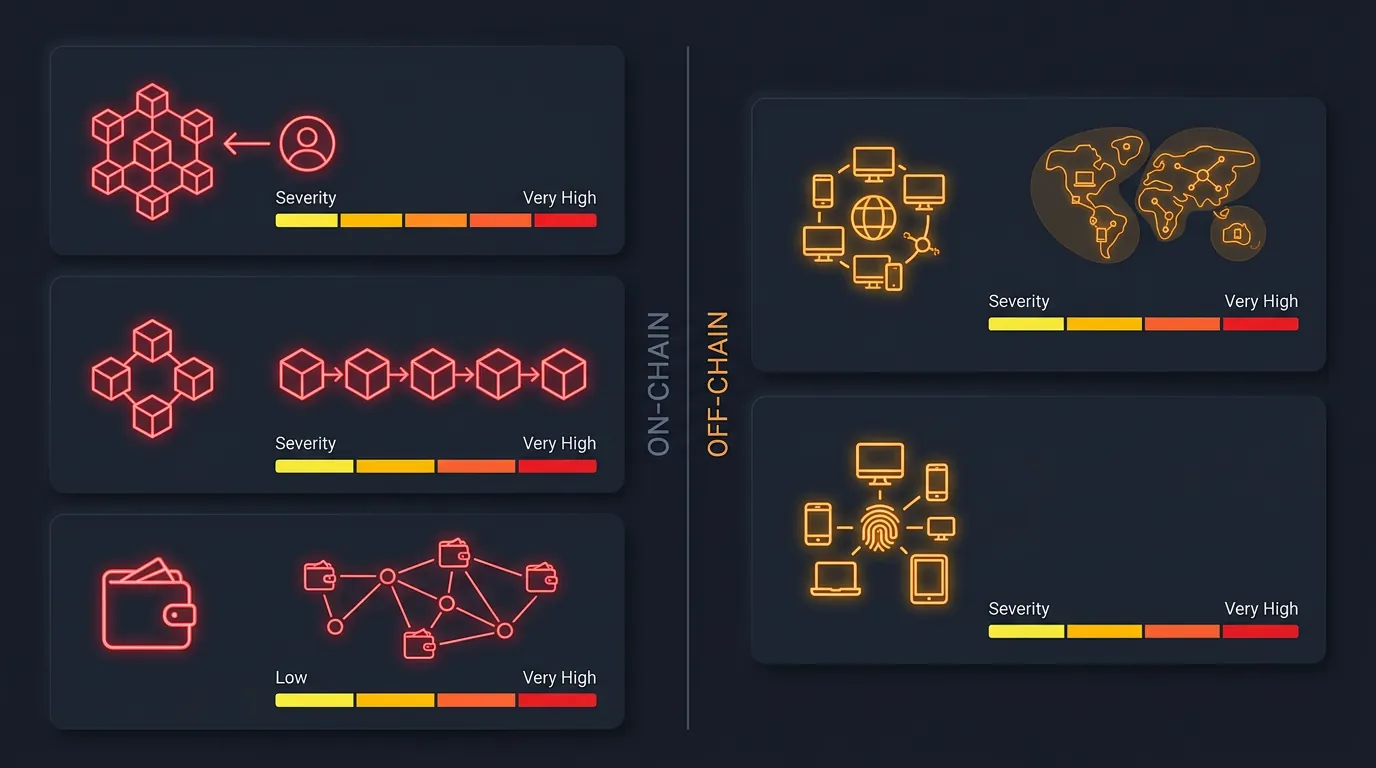
On-chain Signals — Funding Sources, Transaction Patterns, Wallet Graphs
On-chain signals cannot be erased — every transaction is permanently recorded on the blockchain. Protocols use three primary analysis methods: source funding analysis, transaction pattern matching, and wallet interaction graph clustering.
Funding source analysis triggers when 100 wallets withdraw ETH from a single Binance account. Transaction pattern matching flags behavior when dozens of wallets swap the exact same amount (e.g., $50 USDC to ETH), share timing (blocks < 5 minutes apart), and follow identical sequences (swap → bridge → stake). AI cluster analysis, such as that by Trusta Labs, builds wallet graphs — if two wallets share 3+ identical on-chain interactions, the probability of being flagged as Sybil exceeds 85%, according to Trusta Labs data.
Off-chain Signals — IP, Device, and Browser Fingerprints
Off-chain signals can be fully mitigated with the right infrastructure. The three main signals include IP clustering, device fingerprinting, and browser fingerprinting.
IP clustering is flagged when 30+ wallets connect from the same IP address or ASN range. Device fingerprinting collects Canvas, WebGL, and AudioContext data — running MetaMask Extensions on the same PC generates identical fingerprints across all wallets. Browser fingerprinting records the User-Agent, timezone, installed fonts, and screen resolution.
An authentic ARM-based cloud phone completely resolves off-chain tracking: each device provides a unique IMEI, unique Android ID, and genuine sensor data. Antidetect browsers only spoof at the software level, while an undetectable cloud phone delivers hardware-level isolation.
Real Cloud Phones vs Antidetect Browsers vs PCs
The three most common multi-wallet airdrop farming solutions are PC Multi-profiles, Antidetect Browsers, and Real ARM Cloud Phones — each offering different off-chain protection levels regarding privacy, scaling, and cost.
PC Multi-profile (MetaMask + Browser Profiles)
PC Multi-profiling involves creating multiple Chrome profiles, each with a MetaMask Extension installed. It boasts the lowest cost, requiring only one computer. However, the Sybil risk is astronomical: shared Canvas fingerprints, shared WebGL hashes, and identical hardware identifiers. Protocols can detect 100 wallets sharing a single device fingerprint within seconds.
Antidetect Browsers (Multilogin, AdsPower, GoLogin)
Antidetect browsers isolate software fingerprints at the browser level. Each profile simulates distinct Canvas, WebGL, and User-Agent data. Average cost: $100-$300/month for 100 profiles. The critical flaw: MetaMask Mobile cannot run on antidetect browsers — only the web extension is available. Browser extensions only provide software-level isolation, not true hardware isolation.
Real ARM Cloud Phones (XCloudPhone)
An authentic ARM cloud phone provides true hardware-tier isolation. Every single wallet runs on a physically distinct device with genuine IMEIs, Android IDs, and sensor data. Because MetaMask Mobile runs natively and easily passes Play Integrity checks, protocols identify every wallet as an authentic user operating a real smartphone. This makes it an essentially undetectable phone farm.
Real cloud phones resolve off-chain Sybil detection (fact). On-chain protection depends on user behavior (conditional) — including funding paths, timing variations, and interaction diversity.
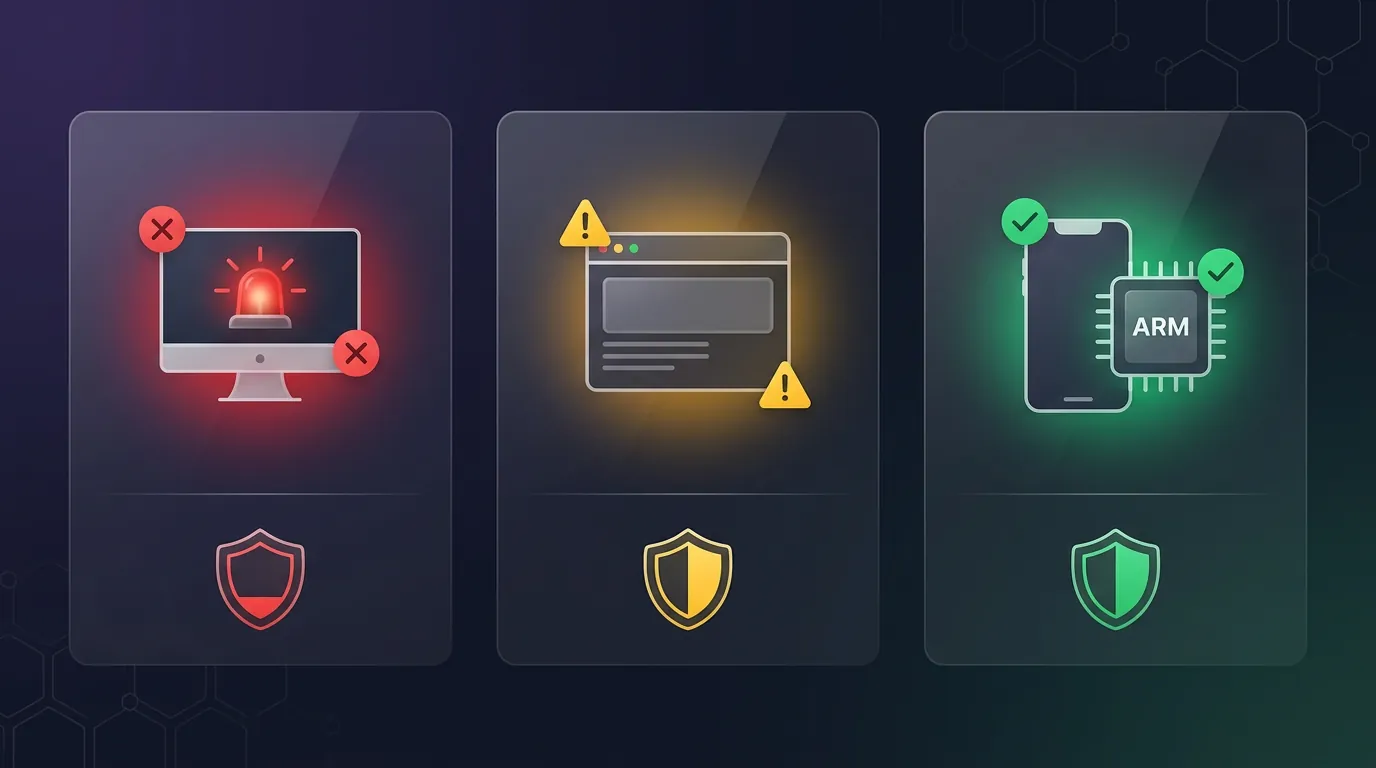
📌 Higher cost equals vastly superior off-chain protection. PCs are the cheapest but suffer the worst filter rates. Cloud phones are the priciest but drop Sybil risk to a minimum. The choice heavily depends on your target airdrops — tier-1 drops (like LayerZero or Arbitrum) absolutely justify investing in robust, isolated infrastructure.
Farming Airdrops With Cloud Phones — 100 Wallets in 1 Day
Setting up a 100-wallet airdrop farming system on cloud phones requires 5 critical steps, easily completed within 24 hours. Every step optimizes one specific layer of protection — from device isolation to on-chain randomization.
Step 1 — Rent Cloud Phones & Assign Residential Proxies
Rent as many cloud phones as the wallets you intend to farm. 100 wallets = 100 dedicated devices. Assign a unique residential proxy to every single device — strictly 1 IP per device with zero sharing.
Never use datacenter proxies — anti-fraud protocols detect commercial ASNs in milliseconds. Residential proxies from legitimate ISPs (e.g., AT&T, Comcast) provide highly trusted carrier identities. Check our proxy integration guide to properly configure proxies on your cloud phones.
💡 Tip: Choose proxy providers offering sticky sessions lasting ≥24 hours. Constantly shifting IPs across geographic regions acts as a massive red flag.
Step 2 — Install Native MetaMask Mobile
Install the official MetaMask Mobile app directly from the Google Play Store — DO NOT sideload APKs. Generate a brand new wallet on each device. Never import seed phrases from old PC extensions.
Safely back up your seed phrases offline — either on paper or metal plates, dedicating one phrase per wallet. Since MetaMask Mobile on real ARM devices effortlessly passes the Play Integrity API, DApps automatically recognize the wallet as operating from a "trusted Android device."
💡 Tip: Name your devices logically in the XCloudPhone dashboard using formats like
Wallet-001,Wallet-002for efficient management.
Step 3 — Configure Anti-detect Per Device
Change the IMEI and Android ID directly through the XCloudPhone dashboard with a single click. Every device must broadcast a totally distinct identity — no two devices should match.
Ensure device timezones perfectly match their proxy IPs: if the proxy is a US IP, set the timezone to US Eastern or Pacific. Verify this directly from inside the cloud phone by visiting whatismyip.com and browserleaks.com to confirm IP, timezone, and pristine fingerprints.
Step 4 — Implement Funding Strategy (CRITICAL)
DO NOT fund 100 wallets through a single mass withdrawal from a centralized exchange (CEX) — this is the most blatant on-chain link possible.
Use secure routing: CEX → Intermediate Wallet A → Target Wallet 1. CEX → Intermediate Wallet B → Target Wallet 2. Most importantly, ensure each target wallet receives slightly different amounts: Wallet 1 gets 0.037 ETH, Wallet 2 gets 0.052 ETH, and Wallet 3 gets 0.019 ETH. Stagger funding times randomly between 2 to 48 hours for each transaction.
💡 Tip: Utilize ≥3 different CEX accounts (Binance, OKX, Bybit) as your primary funding sources, or consider using P2P OTC markets to source larger volumes organically.
Step 5 — Randomize On-chain Activity
Interact with protocols using heavily varied volumes, randomized timings, and completely different token pairs across wallets. Mix swaps, bridging, staking, and LP (liquidity pool) additions using constantly shifting amounts — absolutely no two wallets should possess identical transaction histories.
Stagger network activity: Wallet 1 interacts on Day 2, Wallet 2 on Day 5, and Wallet 3 on Day 8. Never batch actions for 100 wallets on the exact same protocol simultaneously — doing so triggers the strongest pattern matching algorithms known to protocols.
Core Anti-Sybil Best Practices — 7 Golden Rules
Adhering strictly to these 7 anti-Sybil rules reliably drops filter classification rates to below 10% — proven by filter data analysis from Linea, LayerZero, and Berachain distributions.
- Isolate device fingerprints — 1 wallet = 1 dedicated cloud phone. Never share a device across two wallets.
- Decentralize funding sources — Route all initial funds through intermediate wallets, using highly randomized amounts (e.g., 0.037 ETH, 0.052 ETH, 0.019 ETH).
- Diversify protocol interactions — Stop merely swapping. actively bridge, stake, and provide liquidity across a wide spectrum of protocols.
- Randomize transactional timing — Stagger operations by 2 to 48 hours between wallets. Strictly avoid simultaneous batch executions.
- Maintain long-term activity — Interact steadily over multiple months. Testnet-only wallets or sudden last-minute traffic spikes routinely face instant disqualification.
- Separate social identities — Maintain entirely distinct Twitter, Discord, and Telegram accounts for each specific wallet cluster.
- Verify Sybil scores — Proactively use Trusta Labs, Gitcoin Passport, and Chainalysis to self-audit completely before any projected airdrop snapshot.
These 7 rules fuse off-chain isolation (real cloud phones + residential proxies) directly with on-chain behavior randomization — creating two robust, parallel protection layers. Off-chain infrastructure defends your identity; on-chain variance defends your behavior. Missing either layer renders your wallets highly vulnerable to mass filtration.
Cost of Airdrop Farming — 10, 100, and 500 Wallet Projections
Farming high-tier airdrops across 100 wallets using dedicated cloud phones costs approximately $1,300 to $1,500/month — factoring in device rentals, residential proxies, and estimated L2 gas fees. The table below outlines projected operational costs scaled from 10 to 1,000 wallets:
Genuine cloud phones incur a fixed operational cost starting around $10/device monthly (fact). Gas fees, however, can wildly fluctuate up to 200-500% directly depending on network congestion and individual protocol complexity (possibility).
⚠️ ROI Disclaimer: Return on investment relies purely on the protocol's airdrop mechanics. There is absolutely no guaranteed profit. Gas plus infrastructure fees generate sunk expenses regardless of airdrop qualification. Anticipated airdrops may never launch, or token valuations could severely underperform your initial investment.
Quality infrastructure is a locked capital investment — but your final ROI hinges completely on the protocol chosen and the calculated risks you must evaluate thoroughly before commencing operations.
⚠️ Risk Warning — What You Must Know Before Farming Airdrops
Operating a massive multi-wallet airdrop farm carries 3 distinct risk categories that you must heavily weigh before deploying capital:
- Financial Risk — Gas fees, proxy costs, device rentals, and protocol deposits are completely sunk costs. Protocols might arbitrarily cancel airdrops, or the distributed tokens might hold less value than your setup cost. Budgeting for 100 wallets across 3 months equals roughly $4,500-$6,000 permanently lost if airdrops fail to materialize.
- Sybil Detection Risk — Protocols are relentlessly upgrading AI detection grids. Even with stellar anti-Sybil setups, newly trained models can potentially detect previously unknown behavioral patterns. For example, Berachain leverages hyper-advanced multi-layered checks fusing on-chain, off-chain, and specific social media signals.
- Scam Risk — Phishing airdrop pages can comprehensively drain a wallet in a single malicious transaction. Never approve 'unlimited' token allowances. Always utilize completely isolated wallets strictly for airdrop farming, and NEVER use main storage wallets holding large assets. Always manually verify smart contracts via Etherscan prior to any interaction.
⚠️ Disclaimer: This guide is provided strictly for educational and informational purposes. It does not constitute financial or investment advice. You hold total responsibility for all financial decisions. Always thoroughly Do Your Own Research (DYOR) prior to making any investments.
FAQ — Commonly Asked Questions About Farm Airdrops
"What exactly is a retroactive airdrop?"
A retroactive airdrop is an unexpected token reward distributed to users who actively interacted with a protocol prior to any official airdrop announcement. Protocols use this mechanism to fairly reward genuine early adopters over late-stage speculators. Historically, three of the most lucrative retroactive airdrops were Uniswap ($6,400/wallet), Optimism ($4,100/wallet), and Arbitrum (~$2,300/wallet).
"Is farming airdrops considered legal?"
Renting real cloud phones is a fully legal service. Furthermore, farming crypto airdrops generally violates no explicit national laws in most jurisdictions. However, operating multi-wallet networks explicitly violates the Terms of Service of certain protocols — meaning the primary risk is simply being disqualified from receiving the airdrop, rather than facing legal prosecution. Every single protocol enforces its own unique policies.
"How much ETH is required to begin farming?"
A generally accepted minimum is roughly ~0.01 to 0.05 ETH per wallet (around $35 to $175, assuming $3,500/ETH) to cover essential gas fees predominantly on Layer 2 networks like Arbitrum, Optimism, and Base. When scaling, budgeting for 100 wallets at 0.03 ETH demands roughly 3 ETH (~$10,500). Actual USD values will constantly fluctuate alongside the broader volatility of ETH prices.
"Which is better for farming: MetaMask Mobile or Trust Wallet?"
MetaMask Mobile is vastly more popular and boasts significantly deeper integrations with DeFi protocols, predominantly across EVM (Ethereum Virtual Machine) chains like Ethereum, Arbitrum, and Polygon. Trust Wallet shines when handling multi-chain environments that include non-EVM ecosystems. Importantly, both applications run flawlessly native on authentic ARM-based cloud phones.
"Can I run 2 wallets safely on 1 single cloud phone?"
Strongly discouraged. The unbreakable rule is 1 device = 1 wallet = 1 identity. Squeezing two wallets onto a single device inevitably generates clear on-chain behavioral correlations (both wallets interacting near simultaneously) combined with undeniable off-chain fingerprint links (identical IMEIs and IPs). Protocols instantly detect and severely penalize these obvious correlations.
"Which protocols currently show the highest airdrop potential for 2026?"
We deliberately refrain from offering specific predictions, as the airdrop landscape remains fiercely volatile and constantly shifting. Closely monitor the top three reliable tracking sources for live updates: AirdropAlert, CryptoRank, and DeFi Llama. Concentrate your efforts on protocols heavily backed by major VC funding, currently lacking native tokens, and heavily promoting active testnet programs or point accumulation systems.
From Sybil Detection To Hardware Isolation — Safely Scaling
In 2026, Sybil detection grids operate aggressively across two distinct battlefronts: on-chain (analyzing funding sources, transaction patterns, and macro wallet graphs) and off-chain (tracking IP clusters, device fingerprints, and browser footprints). Authentic ARM cloud phones completely neutralize the off-chain threat vector — ensuring every individual wallet operates on a physically distinct device equipped with genuine IMEIs, authentic hardware sensor data, and native MetaMask Mobile installations.
Crucially, rigorous on-chain discipline — including totally separated funding paths, completely randomized timings, and highly diversified protocol interactions — remains the sole responsibility of the user. An undetectable cloud phone farm supplies pristine infrastructure, but it cannot automate organic on-chain behavior.
The fundamental principles of isolation, strict identity segregation, and behavioral randomization deployed in airdrop farming are exactly identical to the methods used in high-trust social media operations — where every crypto wallet utterly demands an isolated environment just as firmly as any high-value social account.
Mastering the 7 golden anti-Sybil rules guarantees robust, dual-layered protection. Spending $1,300 to $1,500 monthly to scale 100 wallets is undoubtedly a premium investment — but when juxtaposed against massive historic airdrops like Arbitrum ($2,300 per wallet × 100 = $230,000 potential), securing flawless infrastructure remains a highly logical baseline for any serious airdrop farmer.
Sign Up For XCloudPhone → — Run every single wallet precisely on an authentic, physically isolated ARM device. Pricing starts at just ~$10/device/month.
References
- Linea — Comprehensive Sybil Detection Report (2025): 517,000 wallets aggressively filtered from a 1.3 million pool
- Trusta Labs — Advanced On-chain Sybil Scoring Methodologies and Open Frameworks
- LayerZero — Official Sybil Report and core criteria for penalizing wallet clusters
- Arbitrum Foundation — Final Airdrop Distribution Analysis and Retrospective (2023)
- Gitcoin Passport — The leading decentralized identity verification and anti-Sybil framework